Dutchie vs Flowhub: an honest 2026 comparison
Honest third-party comparison for US dispensary buyers evaluating Dutchie vs Flowhub in 2026. Features, compliance, hardware ecosystems, and who each platform fits.

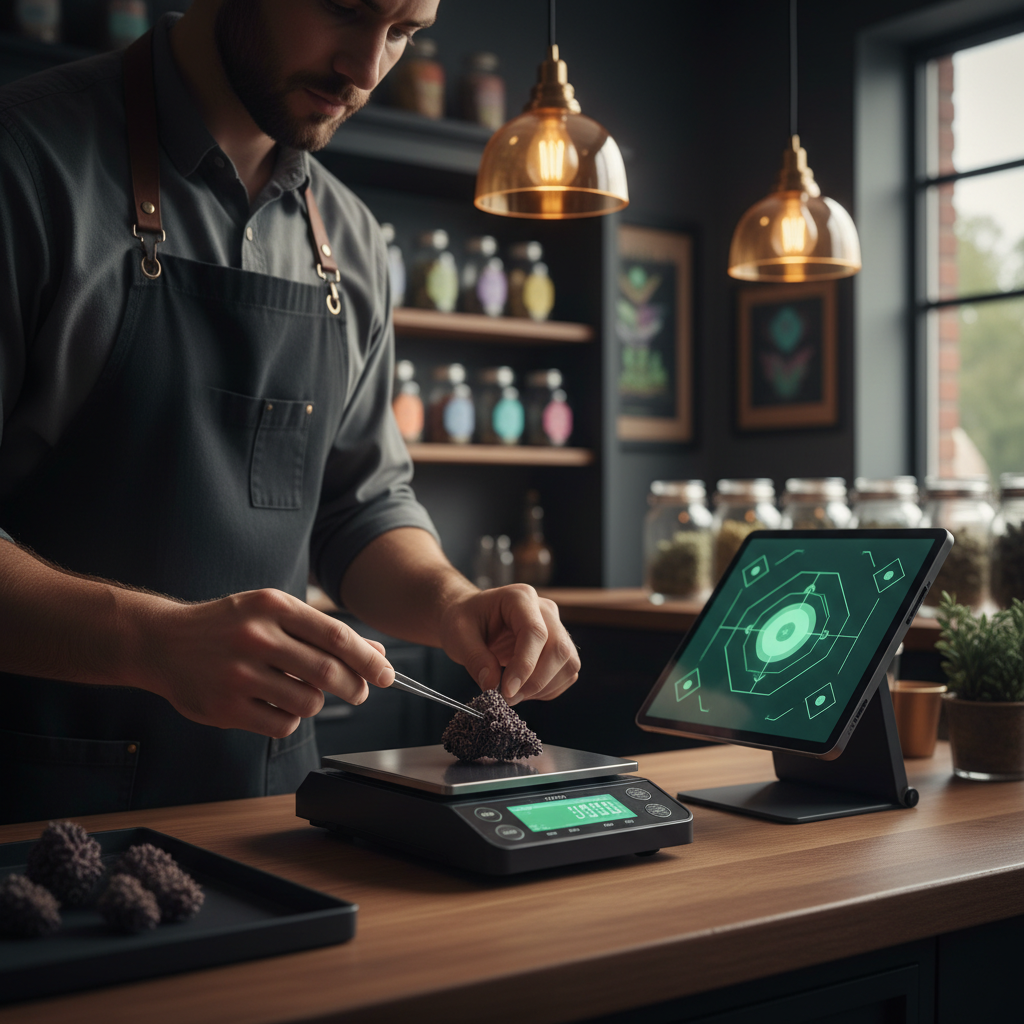
If you are evaluating point-of-sale software for a US dispensary, Dutchie and Flowhub are two names that come up early. Both are established platforms with multi-state footprints, Metrc integration, and loyal user bases. Both are also expensive, complex, and built with different assumptions about what a dispensary actually needs.
This is not a sales pitch for either. It is an honest look at what each platform does, where they differ, and who they fit. If you are comparing Dutchie vs Flowhub, you deserve a third-party view that treats both on their merits.
What Dutchie is built for
Dutchie started as an e-commerce platform for cannabis. The core product was always online ordering — pickup, delivery, and a customer-facing menu — with a POS added later to close the loop. That origin shapes everything about how the platform works.
If your dispensary strategy centers on online ordering, Dutchie is purpose-built for it. The menu is live, customers can browse and order from their phones, and the transaction flows into the POS when they arrive. For a dispensary where online orders represent significant volume, or where you want to offer delivery, Dutchie’s architecture makes sense.
The trade-off is that the POS is one piece of a larger e-commerce system. If you do not need online ordering, you are still paying for a platform designed around it. The pricing reflects that: Dutchie is not cheap, and much of the cost is tied to the e-commerce and payment processing infrastructure.
What Flowhub is built for
Flowhub is a dispensary POS first. It was built for in-store compliance, seed-to-sale tracking, and Metrc integration. The platform’s strength is on the shop floor: inventory management, batch tracking, staff permissions, and detailed reporting for regulators.
If your priority is compliance and operational control, Flowhub has a long track record. More than 1,000 dispensaries use it, and many of those are multi-location operators in states with strict reporting requirements. The platform does not try to be an e-commerce engine. It focuses on what happens behind the counter.
The downside is that Flowhub is not cheap either, and onboarding can be a long process. If you want a system you can get running in a day, this is not it. If you want a system that will hold up under a state audit, it is a serious contender.
Dutchie vs Flowhub: the key differences
E-commerce vs in-store focus
- Dutchie is strongest when online ordering is part of your business model. The menu, the ordering flow, the payment processing, and the delivery logistics are integrated. If you are building a dispensary brand that lives online and offline, Dutchie’s architecture supports that.
- Flowhub is strongest for in-store operations. The POS is fast, the compliance features are deep, and the reporting is built for operators who need detailed oversight. If most of your revenue comes from walk-in customers, Flowhub’s focus matches that.
Metrc and compliance
Both platforms integrate with Metrc, which is non-negotiable for most US dispensaries. The difference is depth and reputation.
- Flowhub is widely regarded as having one of the best Metrc integrations in the industry. The system was built with compliance as the first priority, and that shows in how thoroughly batch tracking, manifests, and reporting are wired into the daily workflow.
- Dutchie offers Metrc integration as part of a broader platform. It works, but the emphasis is on enabling the e-commerce side rather than maximizing compliance detail.
For an operator where compliance is the top concern, Flowhub’s reputation in this area is stronger.
Hardware and ecosystem
- Dutchie integrates with standard POS hardware — receipt printers, cash drawers, barcode scanners. It also ties into payment processing through Dutchie Pay and other processors. The hardware ecosystem is solid but not specialized for cannabis workflows like weighing and labeling.
- Flowhub supports similar generic hardware and has partnerships with scales and label printers through third-party integrations. Like Dutchie, the hardware story is functional but not native — you are usually connecting external devices rather than using built-in Bluetooth integrations.
Neither platform treats the scale or label printer as a first-class citizen the way a purpose-built cannabis POS would.
Pricing and contract terms
Both platforms use custom pricing models, which typically means per-location licensing, per-transaction fees, or a combination of both. Neither publishes transparent pricing on their websites, so expect to go through a sales process to get a quote.
What is consistent across reviews and user reports is that both are expensive, especially for small or single-location dispensaries. The pricing makes sense if you are running multiple locations and high volume, but it can be a burden for a startup or an operator testing a new market.
Multi-location management
- Dutchie offers centralized management across locations, with a unified online menu that can reflect inventory across stores. This is valuable for chains that want one customer-facing brand and the ability to fulfill orders from any location.
- Flowhub also supports multi-location operations, with centralized reporting, permissions, and compliance tracking. The focus is internal — giving the operator a single pane of glass for oversight rather than giving customers a unified storefront.
Both work for multi-location operators. The question is whether your priority is customer-facing unification or internal operational control.
Offline functionality
Both platforms require an internet connection for full functionality. Dutchie’s e-commerce features are inherently online-dependent, and while Flowhub can handle some offline transactions, full compliance reporting and sync require connectivity.
For dispensaries in areas with unreliable internet, or for operators who consider downtime a business-critical risk, this is worth testing during a demo. Ask what happens when the connection drops during a busy Saturday afternoon.
Who should choose Dutchie
Dutchie makes sense if:
- Online ordering, pickup, and delivery are core to your business model
- You want a unified customer-facing menu across multiple locations
- You are willing to pay for a full e-commerce stack, even if you only use part of it
- You are running high volume and the per-transaction or per-location cost is justified by revenue
Who should choose Flowhub
Flowhub makes sense if:
- Metrc compliance and seed-to-sale tracking are your top priorities
- Most of your revenue comes from walk-in customers, and you do not need a heavy e-commerce layer
- You are a multi-location operator who values centralized operational oversight
- You want a POS with a long track record in cannabis-specific workflows
Who should consider a third option: Budy
If neither Dutchie nor Flowhub feels like the right fit, there is a third path.
Budy is a cannabis POS built for dispensaries that want:
- Offline-first reliability — the till, the scale, the labels, and the receipts all work without an internet connection
- AI-powered product onboarding — take a photo of a product, and Budy extracts the name, brand, category, and translations automatically
- Native Bluetooth scale integration — weigh flower directly into the sale with an Acaia Pyxis or Lunar, with real-time pricing and label printing on a Niimbot
- Simpler pricing — USD 98 per month per store, not per device or per user, with two months free and no automatic charges
- Metrc integration — for US dispensaries that need compliance without the enterprise price tag
- Multi-use flexibility — the same POS works for cannabis, coffee shops, and specialty retail, so you can run different store types on one system
Budy also supports Thai dispensaries with PT 33 prescription compliance, bilingual menus, and Thai regulatory reporting — a niche neither Dutchie nor Flowhub serves.
If you want a purpose-built cannabis POS that does not require a heavy e-commerce stack or a long enterprise onboarding process, get in touch and we will walk you through a demo.
The honest bottom line
Dutchie is the best choice if online ordering is central to your strategy and you are willing to pay for a full e-commerce platform. Flowhub is the best choice if Metrc compliance is your top priority and most of your business is in-store.
Both are expensive. Both require meaningful onboarding time. Both require an internet connection for full functionality. And both assume you fit into a specific business model — e-commerce-first for Dutchie, compliance-first for Flowhub.
If you do not fit cleanly into either of those boxes, or if you want offline-first reliability, simpler pricing, and AI-powered workflows, Budy is worth evaluating. We built it for dispensaries that want a modern POS without the enterprise weight.
For more detail on cannabis POS selection criteria, see our buyer’s guide to cannabis POS software. If you want to see how Budy compares head-to-head with Flowhub, our Budy vs Flowhub comparison page breaks down the specifics.