PT 33 Thailand 2026: How Tourists Get a Prescription
Who can issue a PT 33 prescription in Thailand, how fast you can get one, where you can legally buy and consume it, and the penalties for going without.
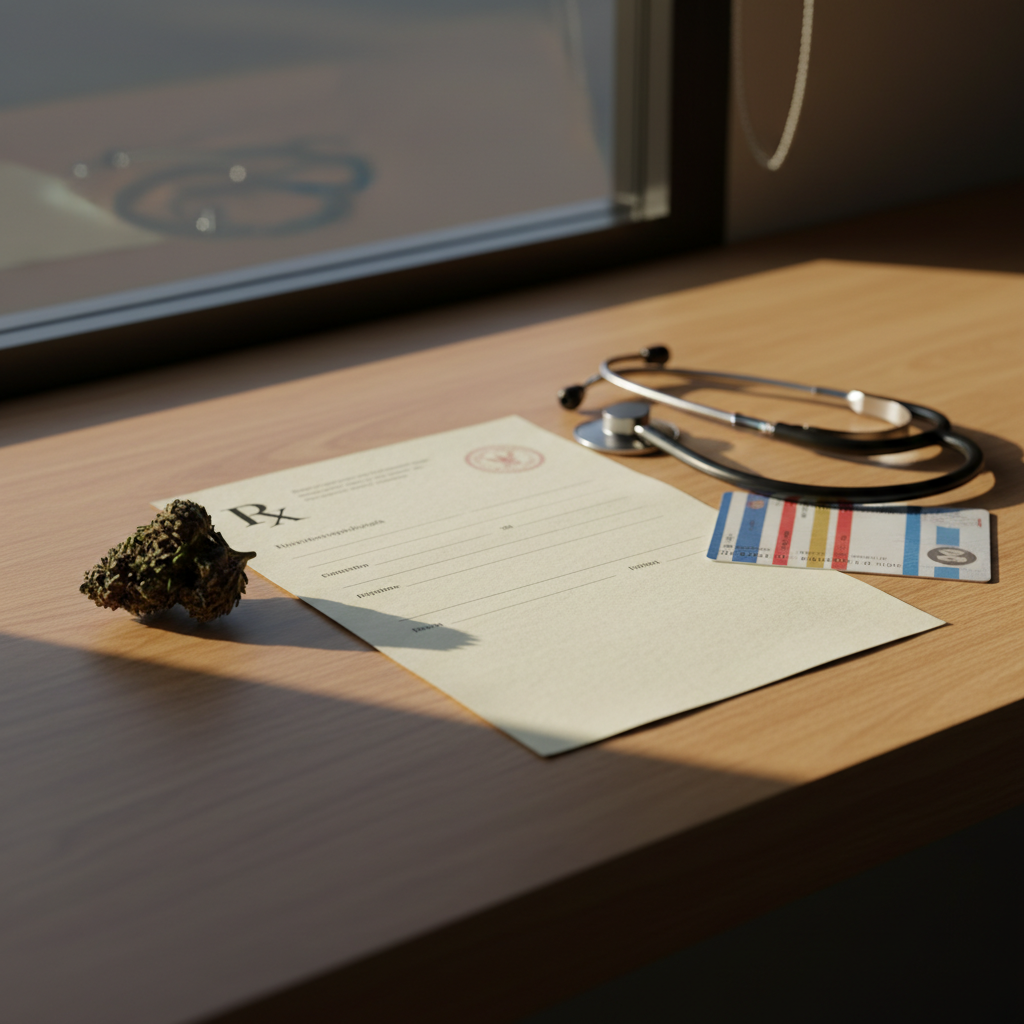
If you’ve been trying to figure out whether cannabis is legal in Thailand in 2026, you’re not the only one. The rules have moved several times since 2022, and the version most people still have in their head — “you can buy it at a dispensary in Bangkok like coffee” — is no longer accurate.
The short answer: cannabis in Thailand is medical-only as of mid-2025. You can still legally buy and use it, but you need a valid prescription on the official PT 33 form (พ.ท. 33 / Por Thor 33), issued by a Thai-licensed practitioner. This guide walks through what changed, what the form is, who can prescribe it, what tourists need to know, and where you can and can’t consume.
This is informational, not legal advice. Regulations evolve. When in doubt, consult a licensed Thai practitioner.
Need the official form?
The PT 33 medical cannabis prescription form is what every authorized practitioner uses. Patients do not fill it out themselves — but it helps to know what you're signing.
Download the official PT 33 form (PDF)Where things stand in 2026
On June 26, 2025, Thailand’s Ministry of Public Health issued the Notification on Controlled Herbs (Cannabis) 2025, returning cannabis to medical-only status. Recreational use is explicitly prohibited. Cannabis sale, possession, and consumption are limited to certified medical purposes only.
The unrestricted-shop era is over. As of February 2026, the country has gone from roughly 18,400 dispensaries down to about 11,100 — over 7,200 shops have closed after failing to meet the new standards. The remaining dispensaries are stricter, more professional, and require a valid PT 33 from every customer.
One important exception: cannabis or hemp extracts containing less than 0.2% THC remain unrestricted. CBD products, hemp cosmetics, and low-THC food supplements stay legal for general sale, no prescription required.
What changed for dispensaries during 2026
Two rule changes since the medical-only switch reshaped what a legal shop actually looks like, and both are visible to you as a customer:
- January 2026 — a qualified person on site. Every dispensary must now have someone qualified present during opening hours: a licensed pharmacist or physician, a registered traditional Thai medicine practitioner, or a worker who has completed the DTAM cannabis-handling training. In practice, this is why the remaining shops feel more like a pharmacy counter than a boutique.
- April 2026 — narrower premises categories. Permitted premises tightened to medical facilities, pharmacies, herbal product retailers, and the workplaces of traditional practitioners. The standalone shopfront of the 2022 boom no longer maps onto a licence category.
For customers, the practical effect is that a shop which cannot verify your PT 33 properly, or has nobody qualified behind the counter, is a shop with a licence problem — and buying there puts your own paperwork on shaky ground. If you run a dispensary, the operator-side view of these rules is on our Thai dispensary POS page.
What is the PT 33 form
PT 33 (พ.ท. 33, “Por Thor 33”) is Thailand’s official medical cannabis prescription form. It has been mandatory since June 27, 2025. It is issued by the Department of Thai Traditional and Alternative Medicine (DTAM) under the Ministry of Public Health.
Key facts every patient should know:
- Valid for 30 days maximum, non-refillable
- Single-dispensary use — the prescription is tied to one shop
- Up to 30 grams per month
- Digitally registered in a central government database, so dispensaries and authorities can verify it
- The patient does not fill it out themselves — it must be issued and signed by a licensed practitioner
- Both the patient and the prescriber sign it
The form captures: date, prescriber name and license type, license number, address, patient name, age, nationality, ID or passport number, diagnosis (the disease or condition), daily dosage in grams, treatment duration in days, and the calculated total grams.
Who can prescribe it
Seven types of practitioners are authorized to issue a PT 33, and all of them must have completed a DTAM-approved cannabis medicine training course of at least 10 hours:
- Medical Doctor
- Thai Traditional Medicine Practitioner
- Applied Thai Traditional Medicine Practitioner
- Dentist
- Pharmacist
- Traditional Chinese Medicine Practitioner
- Folk Healer
If someone offers to “issue” a prescription without one of these credentials, walk away. Forged or unauthorized prescriptions void the protection the form provides and create criminal exposure for the patient.
Qualifying medical conditions
DTAM publishes a list of 15+ conditions that qualify for medical cannabis treatment. Representative entries include:
- Cancer
- Chronic pain
- Chemotherapy-induced nausea
- Appetite loss
- Asthma
- Epilepsy
- Migraine
- Multiple sclerosis-related spasticity
- Parkinson-related symptoms
- Insomnia
- Anxiety
- Depression
- PTSD
- HIV treatment side effects
- Palliative care
The prescriber’s discretion is required and the diagnosis must align with DTAM treatment guidelines. The list is not “anyone with a headache” — practitioners are accountable for the conditions they certify, and the central database lets DTAM see patterns of over-prescription.
How to get a PT 33
Two routes:
In person. Visit a Thai-licensed practitioner from one of the seven categories above. Bring your ID (Thai national ID or passport), any existing medical records, and a clear description of your condition. The consultation typically includes a basic exam and a discussion of dosage. If the practitioner agrees you qualify, they issue and sign the PT 33 on the spot, register it digitally, and you both sign.
Telehealth. Several DTAM-authorized telehealth services operate legally in Thailand, including Cannabox MD, weed.th, and ThaiCannaMed. The flow is similar: book a consultation, present your case to a licensed practitioner over video, and receive a digitally registered PT 33 if approved. Telehealth is convenient but the practitioner still has to verify your identity and document the diagnosis.
Either way, the prescription only works at the dispensary specified on the form. You don’t shop around with one PT 33.
What you can buy
A valid PT 33 lets you purchase up to 30 grams per month from the named dispensary, within the daily dosage and duration the practitioner wrote. Beyond cannabis flower, the dispensary may also stock pre-rolls, oils, tinctures, and edibles that fall under the prescription.
The cannabis you buy must come from a dispensary sourcing from a GACP-certified grower. (GACP = Good Agricultural and Collection Practices, the DTAM’s certification standard.) That’s the dispensary’s compliance burden, not yours, but it’s worth knowing — it’s why the remaining shops have higher quality control than the 2022-era operators.
What you bring to the dispensary
Every dispensary is required to verify four things before completing a sale:
- Government-issued photo ID — Thai ID card or passport for foreigners
- Your valid PT 33 prescription
- A medical certificate detailing the condition (often provided alongside the PT 33 by the same practitioner)
- Proof of age — minimum 20 years old
Dispensaries retain a copy of every PT 33 for at least one year for inspection. Expect them to scan or photocopy yours on the spot.
If you run a dispensary rather than shop at one, that retention rule is only one piece of the job — our guide to monthly PT 27/28/29 filings and GACP sourcing for Thai dispensaries covers the rest.
Where you can consume
Public consumption is prohibited under the Public Health Act, even with a valid prescription. Consumption must take place in a private residence — your home, your hotel room (if the property allows it), or a similar private setting. Smoking cannabis on the street, in a park, in a restaurant, or anywhere considered a public space is an offense regardless of your prescription status.
If you’re staying in a hotel or condo, check the property’s policy before consuming. Many properties prohibit cannabis use even though it’s legal in private — they have the right to set their own rules.
Tourists and foreigners: what you actually need
This is where the most confusion exists. Three things to internalize:
Your home-country prescription is not accepted. A medical card from California, Germany, Israel, or anywhere else is meaningless in Thailand. To buy legally, you need a fresh PT 33 from a Thai-licensed practitioner.
Importing cannabis into Thailand is a serious criminal offense. Bringing flower, edibles, oils, or pens with you in your luggage can lead to imprisonment and a permanent re-entry ban. Customs is not lenient on this. Don’t.
Telehealth is the practical route for tourists. A 20-minute video consultation with a DTAM-authorized service can produce a valid PT 33 for the duration of your stay (up to 30 days). The dispensary verifies your passport at pickup. It’s the same legal mechanism Thai citizens use.
A foreign tourist with a real condition, a Thai practitioner-issued PT 33, and a passport can buy and use cannabis legally and safely. A foreign tourist who walks up to a shop expecting 2022-style service will be turned away.
Penalties — what happens if you ignore the rules
The penalties tightened in 2025 and they apply equally to Thai citizens and foreigners.
| Offense | Penalty |
|---|---|
| Possession without prescription | Fine up to 25,000 THB + up to 3 months jail |
| Public smoking (with or without prescription) | Fine up to 25,000 THB + up to 3 months jail |
| Importing cannabis | Imprisonment + permanent travel ban |
| Foreigners convicted of any of the above | Possible deportation, visa revocation, permanent re-entry ban |
Foreign nationals carry an additional layer of risk: even a fine for a minor offense can become a deportation event with no easy path back. Take the rules seriously.
The CBD exception
Worth repeating because it’s frequently misunderstood:
Cannabis or hemp extracts with less than 0.2% THC are NOT controlled. CBD oils, CBD-infused cosmetics, hemp seed products, and low-THC food supplements are sold over the counter in Thailand without a prescription. If your goal is CBD for skin, sleep, or anxiety and you don’t need the THC component, this is a fully legal option — no PT 33, no dispensary verification, no monthly limit.
Legal vs illegal at a glance
| Activity | Status |
|---|---|
| Buying cannabis with a valid PT 33 from an authorized dispensary | ✓ |
| Consuming cannabis in your private residence | ✓ |
| Buying CBD products under 0.2% THC over the counter | ✓ |
| Telehealth consultation with a DTAM-authorized service | ✓ |
| Possessing cannabis without a PT 33 | ✗ |
| Public consumption (street, park, restaurant) | ✗ |
| Recreational use | ✗ |
| Bringing cannabis into Thailand from abroad | ✗ |
| Using a foreign country’s medical card to buy in Thailand | ✗ |
FAQ
Can I get a PT 33 the same day I arrive in Thailand? Often yes, via telehealth. Several DTAM-authorized services offer same-day consultations. Allow a few hours from booking to digital issuance.
Does the PT 33 expire? Yes — 30 days from the date of issue, non-refillable. If your stay or condition lasts longer, you renew with the same or another licensed practitioner.
Can I share cannabis I bought legally with a friend? No. Possession outside of the named patient is not authorized by the PT 33 you’re holding. Each user needs their own prescription.
Are edibles legal in Thailand? Edibles for medical use under a PT 33 are permitted at authorized dispensaries. Recreational edibles sold to walk-in customers are not.
Is smoking cannabis in my hotel room legal? Legally yes if the property allows it. Many hotels and condos prohibit indoor smoking of any kind by their own policy — check before lighting up. A property complaint can still bring police regardless of your prescription.
Can I drive after using prescribed cannabis? No. Driving while impaired is illegal regardless of whether the substance was prescribed. Treat it the same as a sedating prescription medication.
Do Thai dispensaries need a practitioner on site? Yes. Rules that took effect in January 2026 require a qualified person present whenever the premises is open — a licensed pharmacist or physician, a registered traditional Thai medicine practitioner, or a worker who has completed the DTAM cannabis-handling training. A shop that cannot produce one during an inspection is operating outside the rules.
Can a dispensary still operate as a standalone shop? Not in the 2022 sense. By April 2026 the permitted premises had narrowed to medical facilities, pharmacies, herbal product retailers, and the workplaces of traditional practitioners. The shopfront model that defined the boom years no longer fits the licence categories, which is a large part of why the shop count fell from roughly 18,400 to about 11,100.
The bottom line
Cannabis in Thailand in 2026 is legal for medical use with a PT 33, illegal for recreation, and unrestricted for low-THC CBD. The system is real, the records are digital, and both dispensaries and authorities verify the form before any sale. The penalties for ignoring it are meaningful, especially for foreigners.
For most patients and travelers with a legitimate condition, the path is straightforward: get a PT 33 from a Thai-licensed practitioner (in person or via telehealth), buy from the named dispensary, consume in private. That’s it.
Download the official PT 33 form (PDF)
For reference. The form is issued and filled out by your licensed practitioner — but it's helpful to know what fields are involved before your consultation.
Download PT 33 (PDF)If you run a dispensary and you’re trying to figure out the operator-side requirements (PT 27, 28, 29, GACP sourcing, the on-site practitioner rule), our companion piece for dispensary operators walks through it. If you want to see how a modern POS captures all of this automatically on every sale, the Budy POS for Thai cannabis dispensaries post covers the practical workflow.
Final reminder: this article is informational and reflects publicly available DTAM guidance as of April 2026. It is not legal advice. For your specific situation, consult a licensed Thai practitioner.