Budy vs Loyverse: Which Cannabis POS Fits a Modern Specialty Store?
A feature-by-feature comparison of Budy and Loyverse for cannabis dispensaries: offline-first architecture, scale integration, AI, and shop-floor workflow.

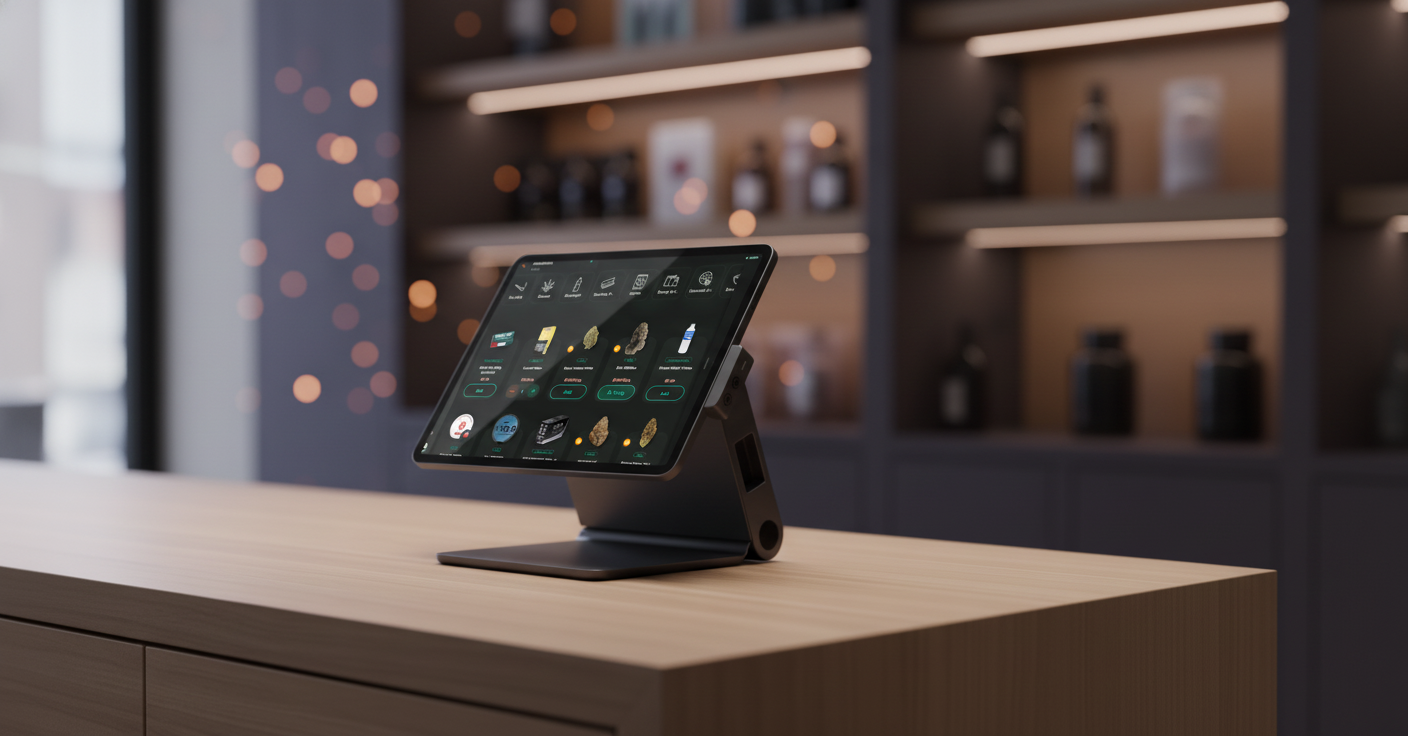
If you’re evaluating a point of sale for a cannabis dispensary, coffee shop, or specialty retail store, Loyverse is one of the names you’ll hit early. It’s free, it’s been around, and it does the basics well. Budy takes a different angle — purpose-built for specialty retail with AI agents that do real work, not just record sales.
This isn’t a hit piece. Loyverse is a solid generic POS. But “generic” is doing a lot of work in that sentence, and for operators running a dispensary or specialty store, the gaps show up fast. Here’s an honest comparison of what each tool does.
Who each tool is built for
Loyverse is a general-purpose retail and restaurant POS. It’s designed to work for a corner grocery, a nail salon, a small café, and a clothing boutique — the same way. That breadth is its strength and its weakness. The app does not care whether you sell t-shirts or cannabis flower, which means it also doesn’t help you with the things that make those workflows different.
Budy is purpose-built for cannabis dispensaries, coffee shops, and specialty retail operators. The workflows, hardware integrations, and AI agents are designed around what those stores actually do — weighing flower, tracking strains, managing variants, handling bilingual menus, running AI-powered promotions.
If you’re a general retailer and you just need to ring up SKUs, Loyverse will serve you. If you run a dispensary or a specialty store where the product itself is complex, read on.
Offline-first architecture
Both tools work offline. But there’s a meaningful difference in how.
- Loyverse caches transactions locally and syncs when the connection returns. Good enough for short outages.
- Budy is offline-first by design. ObjectBox runs as the primary local database on every device. The backend is a sync target, not the system of record. The store keeps operating through multi-day ISP outages, and every POS, tablet, and mobile device stays in sync with the others on the local network via ObjectBox Sync Server. You also get offline authentication — cached password, PIN login, or face login — with tiered permissions that gracefully degrade based on how long you’ve been offline.
For a dispensary in a high-foot-traffic location where a five-minute outage means a queue out the door, the difference matters.
Hardware integrations
Loyverse supports the generic retail hardware bundle: Bluetooth or Ethernet receipt printers, USB or Bluetooth barcode scanners, cash drawers. That’s it.
Budy supports the same generic hardware plus:
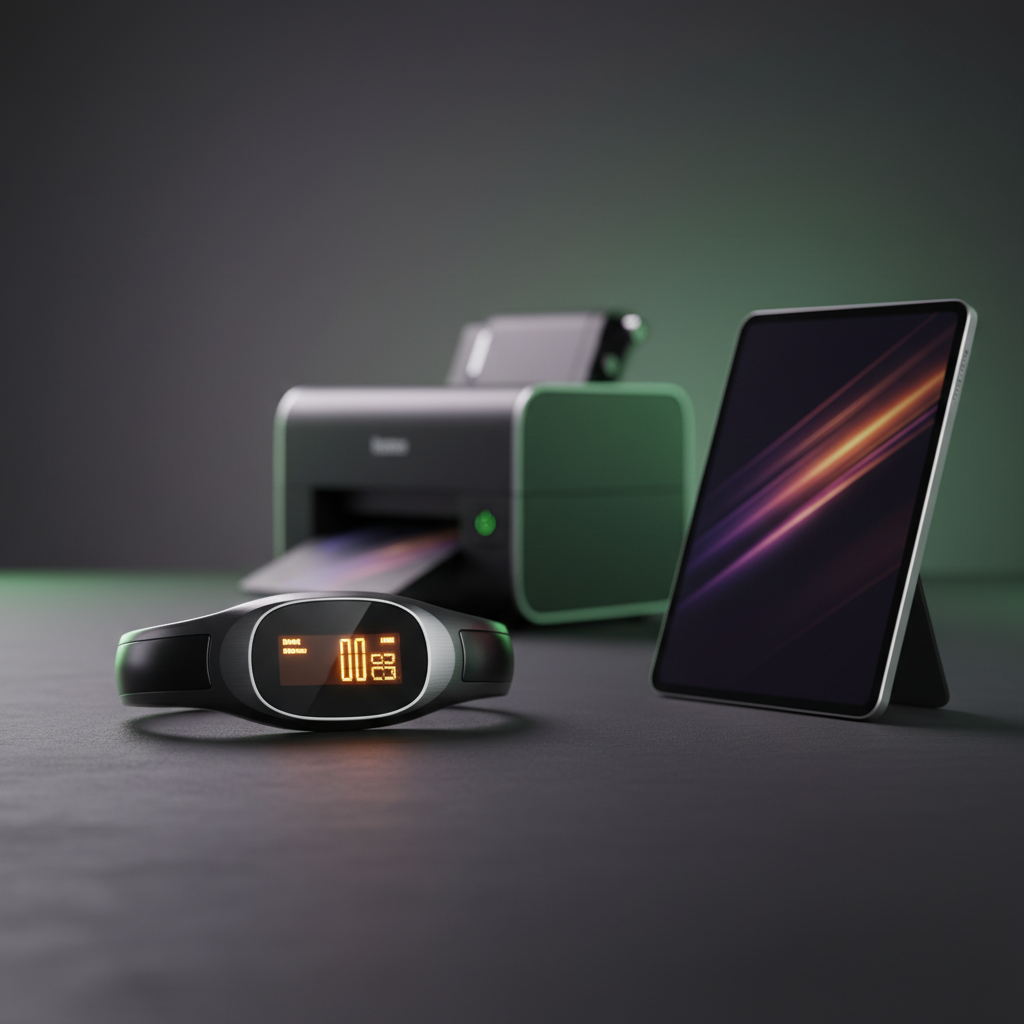
- Acaia Lunar Bluetooth scales — native integration for weighing cannabis flower, with the reading flowing straight into the line item as grams, with the price calculated in real time. No manual entry, no re-typing, no scale math.
- Niimbot label printers — print strain and product labels directly from the app, with templates for cannabis compliance fields.
- SUNMI integrated scanners — for devices with built-in barcode/QR scanners.
- Samsung TV / Miracast Cast Display — drive a secondary TV screen from the POS showing rotating offers, product highlights, and custom messages to customers in line.
If your workflow involves weighing product or printing labels with strain-specific fields, Loyverse can’t do it without a manual workaround.
AI and automation
This is where the tools diverge the most.
Loyverse is a transactional POS. You ring up items. You pull reports. The software does what you tell it.
Budy is an Agentic POS — AI agents that do real operational work alongside you:
- AI Smart Scanner — take a photo of a product, and Budy extracts the name, brand, category, attributes, and generates translations in your configured languages. Onboarding a new SKU goes from minutes of typing to a few seconds.
- Voice Assistant — a Gemini Live voice interface for hands-free actions: checking inventory, starting a sale, looking up a member, printing a label. Useful when your hands are full or you’re training a new budtender.
- Smart Offers — promotions that trigger at checkout based on cart contents, time of day, or member status, without a human building rule trees.
- Strain Researcher — pull enriched strain data (THC/CBD, effects, genetics, descriptions) into your catalogue with Google-grounded AI research, saving hours of manual data entry.
Loyverse has none of this. It’s not that the features are weaker — they don’t exist.

Multi-channel: POS, admin, and web shop
Loyverse has a POS app and a cloud Back Office for reporting and item management. If you want an online store, you integrate a third party.
Budy ships as three coordinated surfaces on the same sync layer:
- POS (tablet, phone, desktop) — the shop-floor app.
- Admin — web dashboard for catalogue, inventory, reports, tenant configuration.
- Web Shop — a customer-facing storefront per tenant at
{tenant}.budy.app, with push notifications that ring the POS when an online order lands. Orders created online show up in the POS in real time, and status updates push back to the customer’s phone.
If you want a dispensary with pickup or delivery that doesn’t require glueing three tools together, that matters.
Multi-language and multi-currency
Loyverse supports multiple languages in its UI and multiple currencies. It doesn’t translate your product catalogue.
Budy ships with AI-powered catalogue translation. Add a product in English, and Budy generates Thai (or any configured language) translations for names, descriptions, attributes, and variants — auto-re-translated when the master record changes. For a Thai dispensary or a store serving a bilingual customer base, this removes a whole class of ongoing content work.
Cannabis and specialty retail workflows
Loyverse has generic “items” with optional modifiers and variants. It treats cannabis the same way it treats sandwiches.
Budy has first-class support for:
- Strains — a separate entity from products, with THC/CBD, effects, genetics, descriptions, imagery, and strain-specific categorization.
- Variants with EAV attributes — flexible attribute schemas per product (grams, potency, lab test dates, harvest batch, etc.).
- Categorization as a dual taxonomy — Categories for classification (Category → SubCategory → Classification) and Collections for display hierarchy, so your storefront and your internal operations don’t fight each other.
- Weight-based pricing — tied directly to the Bluetooth scale, with per-gram pricing per strain.
These are not add-ons. They’re part of the core data model.
At a glance: where the differences show up
Rather than one long feature matrix, here’s the comparison broken down by the things you actually feel on the shop floor.
Offline resilience
| Budy | Loyverse | |
|---|---|---|
| Works during an ISP outage | ✓ | Partial |
| Multi-device real-time sync | ✓ | ✗ |
| Offline login (PIN, face, cached password) | ✓ | ✗ |
Hardware
| Budy | Loyverse | |
|---|---|---|
| Native Bluetooth scale (Acaia Lunar) | ✓ | ✗ |
| Thermal label printer (Niimbot) | ✓ | ✗ |
| Secondary TV / Cast Display | ✓ | ✗ |
AI & automation
| Budy | Loyverse | |
|---|---|---|
| AI product onboarding from a photo | ✓ | ✗ |
| Automatic catalogue translation | ✓ | ✗ |
| Voice assistant at the POS | ✓ | ✗ |
Cannabis & specialty workflows
| Budy | Loyverse | |
|---|---|---|
| Weight-based pricing tied to the live scale | ✓ | ✗ |
| First-class strain entity (THC/CBD, effects) | ✓ | ✗ |
| Flexible per-product attributes | ✓ | Limited |
Multi-channel
| Budy | Loyverse | |
|---|---|---|
| Built-in customer-facing web shop | ✓ | ✗ |
| Push notifications between POS and shop | ✓ | ✗ |
| Multi-tenant architecture for chains | ✓ | Multi-store |
Where Loyverse still has the edge
| Budy | Loyverse | |
|---|---|---|
| Mature 3rd-party integration marketplace | Growing | ✓ |
| Community, tutorials, legacy depth | Newer | ✓ |
Where Loyverse is stronger today
Credit where it’s due. Loyverse has:
- A larger, more mature third-party integration marketplace.
- A longer track record and a bigger community, which means more Stack Overflow answers and YouTube tutorials.
- A simpler mental model if all you want is “ring up items and see a daily sales report.”
If you’re a small shop with simple SKUs, no compliance concerns, no weighing, no bilingual needs, and no ambition to run online + in-store as one, Loyverse is a reasonable starting point.
Where Budy wins
- Cannabis and specialty retail fit — strain management, scale integration, label printing, weight-based pricing.
- AI features — AI Smart Scanner, voice, translations, strain research, smart offers.
- Unified POS + admin + web shop — one data layer, not three stitched-together tools.
- Offline-first as a first-class design principle — not a fallback mode.
- Cast Display — the secondary-screen experience for customers in line is a subtle but real conversion lever.
- Multi-tenant architecture — clean separation of tenants with shared master catalogue support, good for chains.
The honest bottom line
Loyverse is a generic POS that can be made to work in a dispensary. Budy is a POS built for dispensaries and specialty retail that also happens to do the generic stuff well.
If you want a product that works with you — weighs the flower, labels the jar, translates the menu, handles the online order, and stays running when the internet doesn’t — get in touch and we’ll walk you through it.
And if you’re curious about the hardware side, the AI Smart Scanner deep dive and the Bluetooth scale integration page have more detail on two of the workflows this article touches on. For the broader category context, see our guide on specialty POS vs generic POS for cannabis — it’s the buyer’s-lens view of the same comparison.